Class 5.
Re: Topic 04.10.2025
Здравствуйте
Re: Topic 04.10.2025
Здравствуйте
Re: Topic 04.10.2025
Re: Topic 04.10.2025
от Hongwei Yang -
Здравствуйте
Re: Topic 04.10.2025
Здравствуйте
Re: Topic 04.10.2025
от Мохаммад Акбариязди -
Доброе утро
Re: Topic 04.10.2025
от Пегах Пурсалман -
здравствуйте
Re: Topic 04.10.2025
от Sina Nasiri -
Добрый утро
Насири Сина 229
Насири Сина 229
Re: Topic 04.10.2025
от Nazanin Sharbati -
Здравствуйте Шарбати Назанин 229
Re: Topic 04.10.2025
Здравствуйте
Re: Topic 04.10.2025
от Сейедсохел Ягуби -
Здравствуйте
Re: Topic 04.10.2025
от Ebrahim Sharbati -
Эбрахим шарбати наван
Re: Topic 04.10.2025
от Behnoosh Taheri -
Hello
Тахэри бехнуш
Тахэри бехнуш
Re: Topic 04.10.2025
от Ayda Baseri -
Hello Aйда басери. g 229
Re: Topic 04.10.2025
от Марьям Эсмалипур -
Hello
Maryamesmalipour
Maryamesmalipour
Re: Topic 04.10.2025
от Behnam Amiri -
Здравствуйте
Re: Topic 04.10.2025
от LIN (Инь Линь) YIN -
good morning
Re: Topic 04.10.2025
от Hanieh Zafari -
Re: Topic 04.10.2025
Здравствуйте
Re: Topic 04.10.2025
Re: Topic 04.10.2025
Re: Topic 04.10.2025
Good morning
Re: Topic 04.10.2025
от Мохамед бесем Мулаа -
Здравствуйте
Мулаа мохамед бесем група 429
Мулаа мохамед бесем група 429
Re: Topic 04.10.2025
от Риахи Мехди -
Riahi Mehdi group 525
Re: Topic 04.10.2025
от Pedram Asadi Farsani -
Pedram Asadi farsani 229
Re: Topic 04.10.2025
от 心怡 (Жао Синьи) 饶 -
Re: Topic 04.10.2025
от Ebrahim Sharbati -
Re: Topic 04.10.2025
от Shaghayeg Pourhoeni -
Hi Iam Shaghayeg Pourhosini
Re: Topic 04.10.2025
от Пегах Пурсалман -
Re: Topic 04.10.2025
от Dhouha Brahim -
Dhouha Brahim 525
Re: Topic 04.10.2025
от Dhouha Brahim -
Re: Topic 04.10.2025
от Ayda Baseri -
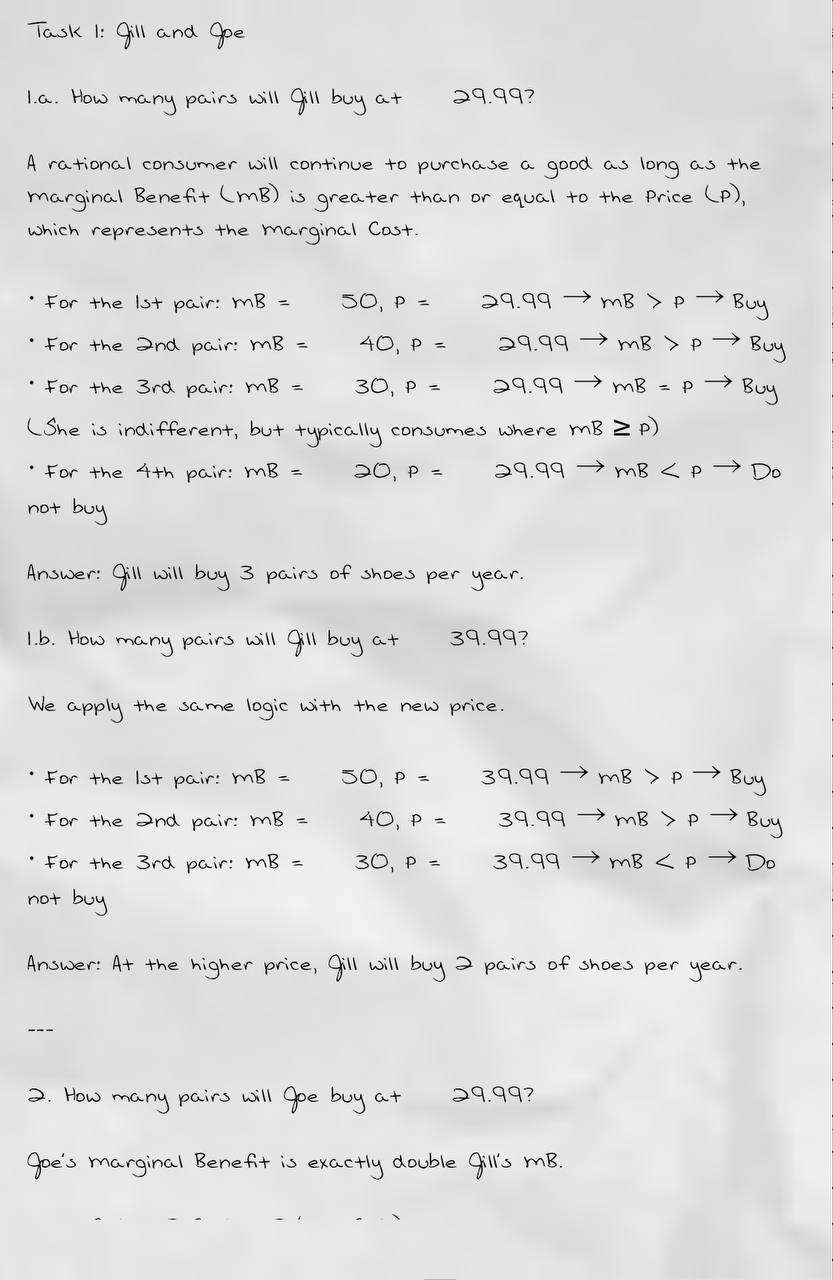
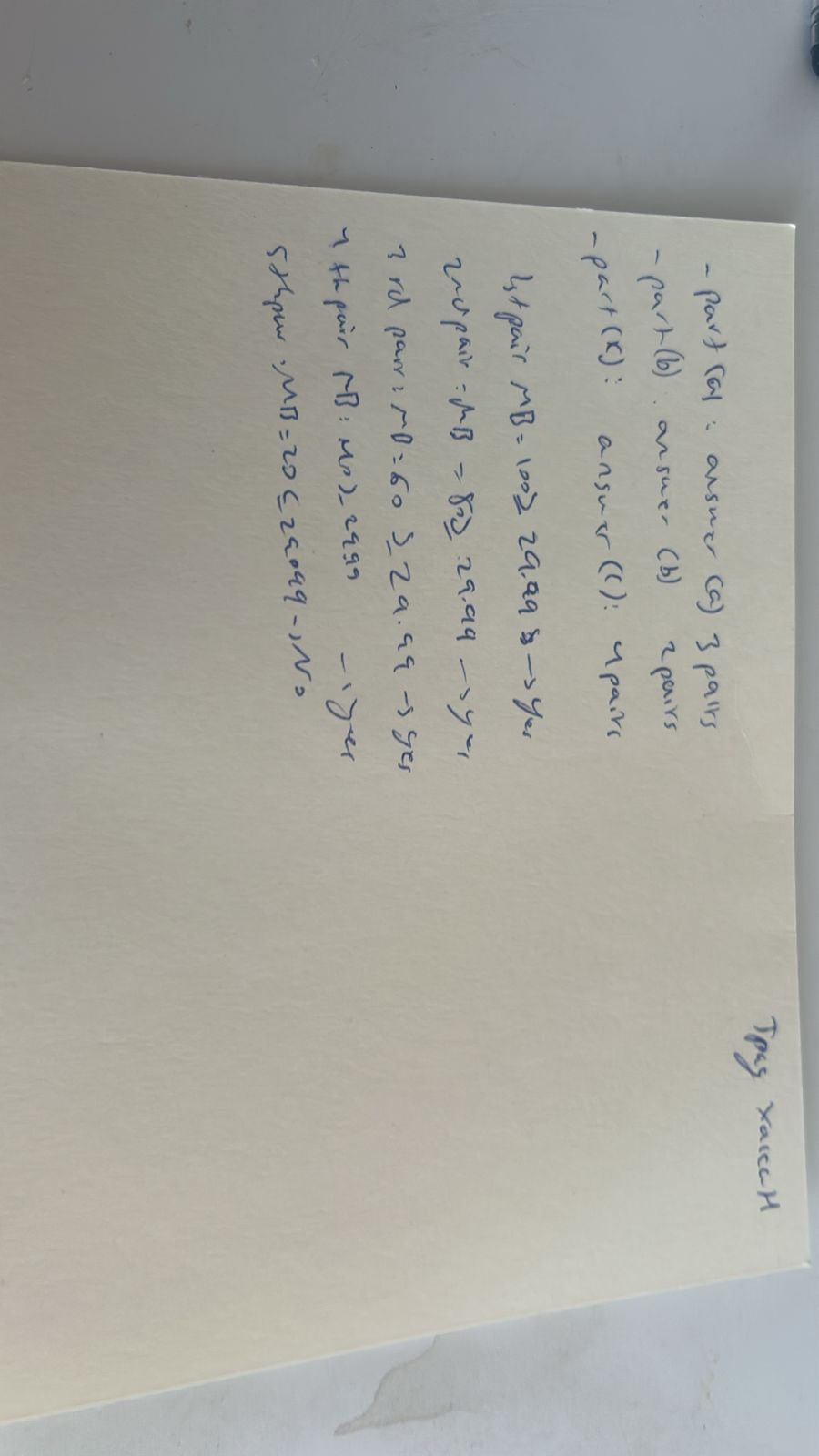
a) Jill will buy 3 pairs of shoes per year because for the 3rd pair, the marginal benefit ($30) is greater than or equal to the price ($29.99), but for the 4th pair, the marginal benefit ($20) is less than the price.
b) If the price increases to $39.99, Jill will now buy **2 pairs** of shoes per year because for the 2nd pair, the marginal benefit ($40) is still greater than the price, but for the 3rd pair, the marginal benefit ($30) is less than the new price.
Re: Topic 04.10.2025
До свидания
Re: Topic 04.10.2025
от Пегах Пурсалман -
Re: Topic 04.10.2025
от 心怡 (Жао Синьи) 饶 -
1️⃣a• For the 1st pair: MB = $50, Price = $29.99 → $50 ≥ $29.99 → Buy.
• For the 2nd pair: MB = $40, Price = $29.99 → $40 ≥ $29.99 → Buy.
• For the 3rd pair: MB = $30, Price = $29.99 → $30 ≥ $29.99 → Buy.
• For the 4th pair: MB = $20, Price = $29.99 → $20 < $29.99 → Do not buy.
Thus, Jill will buy 3 pairs per year.
b.• For the 1st pair: MB = $50, Price = $39.99 → $50 ≥ $39.99 → Buy.
• For the 2nd pair: MB = $40, Price = $39.99 → $40 ≥ $39.99 → Buy.
• For the 3rd pair: MB = $30, Price = $39.99 → $30 < $39.99 → Do not buy.
Thus, Jill will now buy 2 pairs per year.
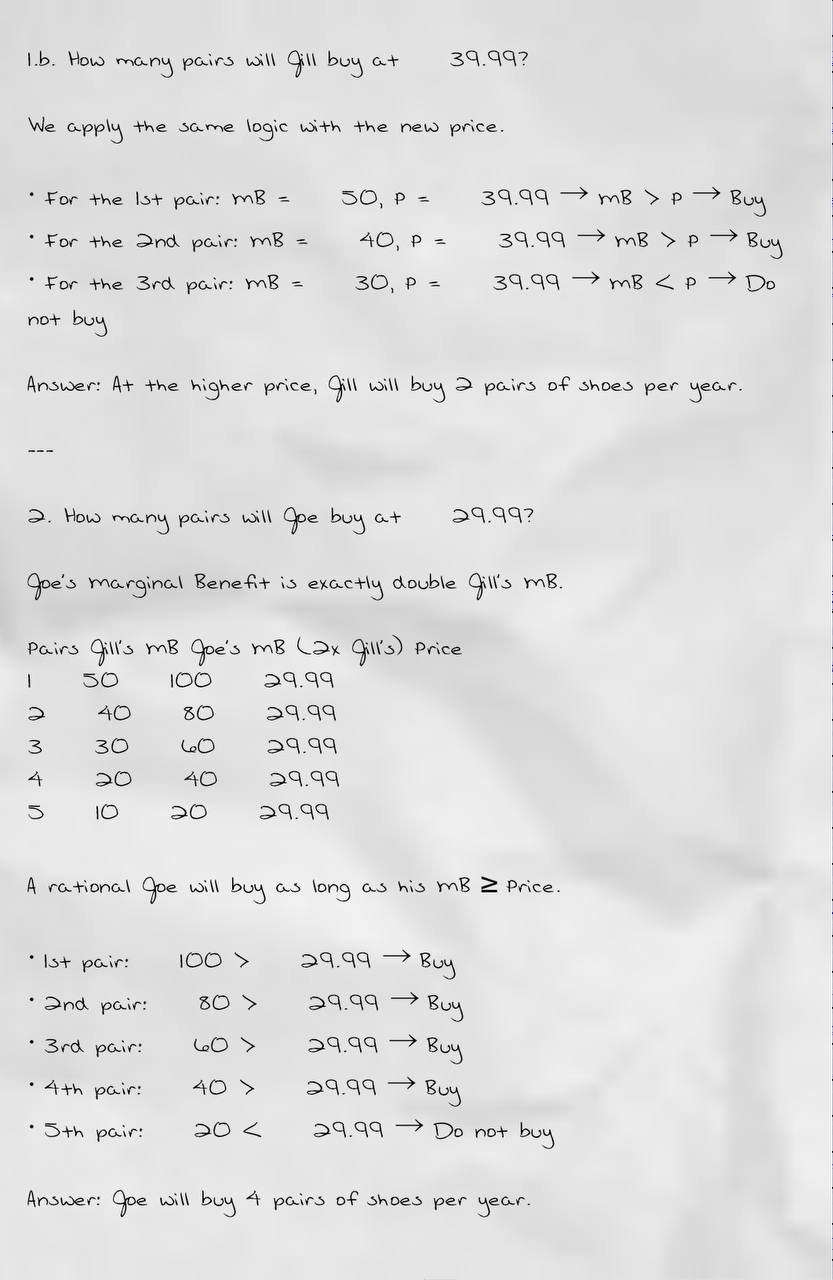
2️⃣ • For the 1st pair: Joe’s MB = $50 × 2 = $100, Price = $29.99 → $100 ≥ $29.99 → Buy.
• For the 2nd pair: Joe’s MB = $40 × 2 = $80, Price = $29.99 → $80 ≥ $29.99 → Buy.
• For the 3rd pair: Joe’s MB = $30 × 2 = $60, Price = $29.99 → $60 ≥ $29.99 → Buy.
• For the 4th pair: Joe’s MB = $20 × 2 = $40, Price = $29.99 → $40 ≥ $29.99 → Buy.
• For the 5th pair: Joe’s MB = $10 × 2 = $20, Price = $29.99 → $20 < $29.99 → Do not buy.
Thus, Joe will buy 4 pairs per year.
• For the 2nd pair: MB = $40, Price = $29.99 → $40 ≥ $29.99 → Buy.
• For the 3rd pair: MB = $30, Price = $29.99 → $30 ≥ $29.99 → Buy.
• For the 4th pair: MB = $20, Price = $29.99 → $20 < $29.99 → Do not buy.
Thus, Jill will buy 3 pairs per year.
b.• For the 1st pair: MB = $50, Price = $39.99 → $50 ≥ $39.99 → Buy.
• For the 2nd pair: MB = $40, Price = $39.99 → $40 ≥ $39.99 → Buy.
• For the 3rd pair: MB = $30, Price = $39.99 → $30 < $39.99 → Do not buy.
Thus, Jill will now buy 2 pairs per year.
2️⃣ • For the 1st pair: Joe’s MB = $50 × 2 = $100, Price = $29.99 → $100 ≥ $29.99 → Buy.
• For the 2nd pair: Joe’s MB = $40 × 2 = $80, Price = $29.99 → $80 ≥ $29.99 → Buy.
• For the 3rd pair: Joe’s MB = $30 × 2 = $60, Price = $29.99 → $60 ≥ $29.99 → Buy.
• For the 4th pair: Joe’s MB = $20 × 2 = $40, Price = $29.99 → $40 ≥ $29.99 → Buy.
• For the 5th pair: Joe’s MB = $10 × 2 = $20, Price = $29.99 → $20 < $29.99 → Do not buy.
Thus, Joe will buy 4 pairs per year.
Re: Topic 04.10.2025
Re: Topic 04.10.2025
от Мохаммад Акбариязди -
До свидания
Re: Topic 04.10.2025
от Мохаммад Акбариязди -
Re: Topic 04.10.2025
от Мохамед бесем Мулаа -
Topic 04.10.2025
Мулаа мохамед бесем група 429
Re: Topic 04.10.2025
от Мохамед бесем Мулаа -
Topic 04.10.2025
Мулаа мохамед бесем група 429
Re: Topic 04.10.2025
Re: Topic 04.10.2025
от LIN (Инь Линь) YIN -
Re: Topic 04.10.2025
от Мохамед бесем Мулаа -
Class 5 ( jill and joe task)
Мулаа мохамед бесем 429
Re: Topic 04.10.2025
от Pedram Asadi Farsani -
Pedram Asadi Farsani 229
Re: Topic 04.10.2025
Re: Topic 04.10.2025
от Pedram Asadi Farsani -
My answer is in file
Re: Topic 04.10.2025
от Pedram Asadi Farsani -